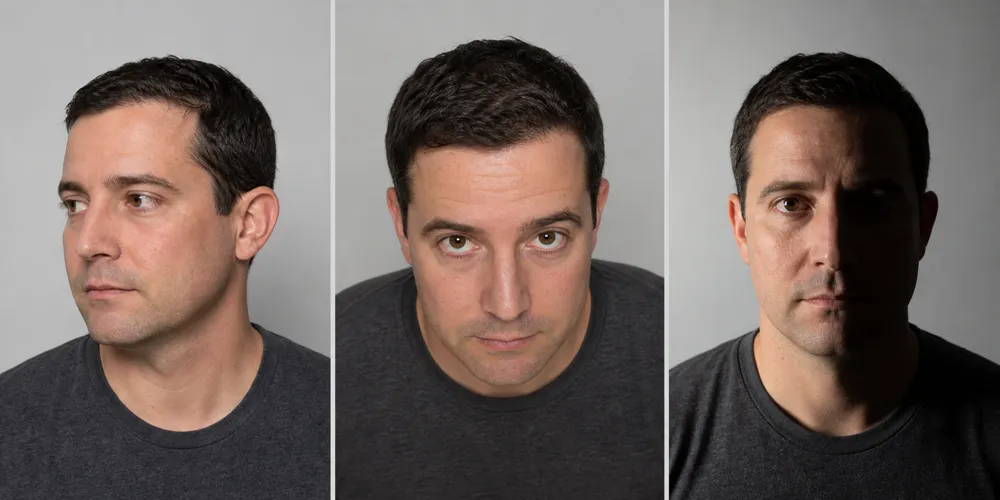
Face Shape Detector — And the Numbers Behind the Answer

Most face shape detectors hand you a word. This one hands you the word plus the five measurements it came from, so you can check the reasoning instead of taking it on faith.

Free while in beta. The measuring runs on your own device.

Analyze your face

Deterministic geometry, not an AI opinion. Runs entirely in your browser.

🔒 Your photo is read locally and scored on your own device. Nothing is uploaded to score it.

Drag a photo here, or click to choose one

JPEG or PNG. Front-facing, well-lit, one face per photo.

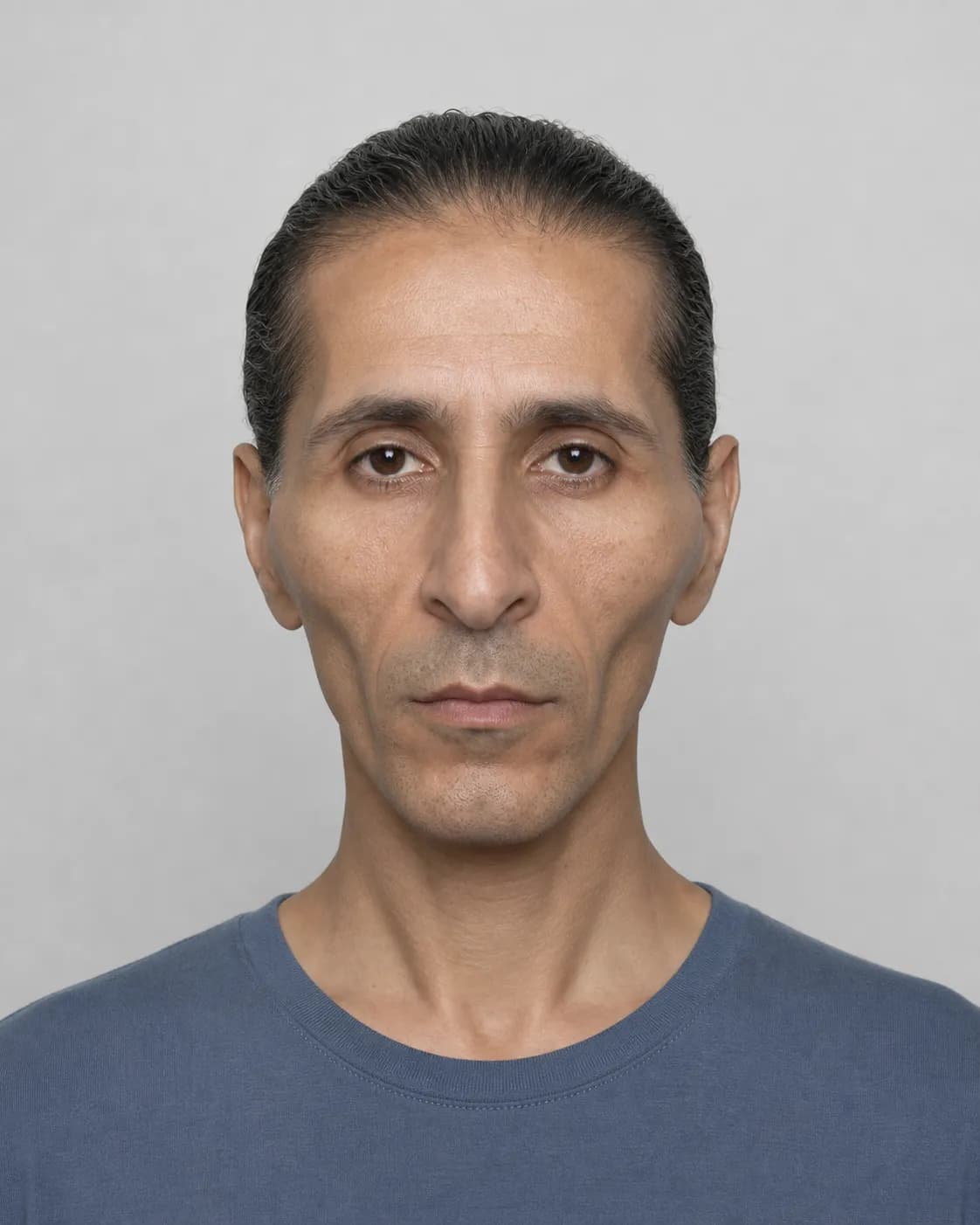
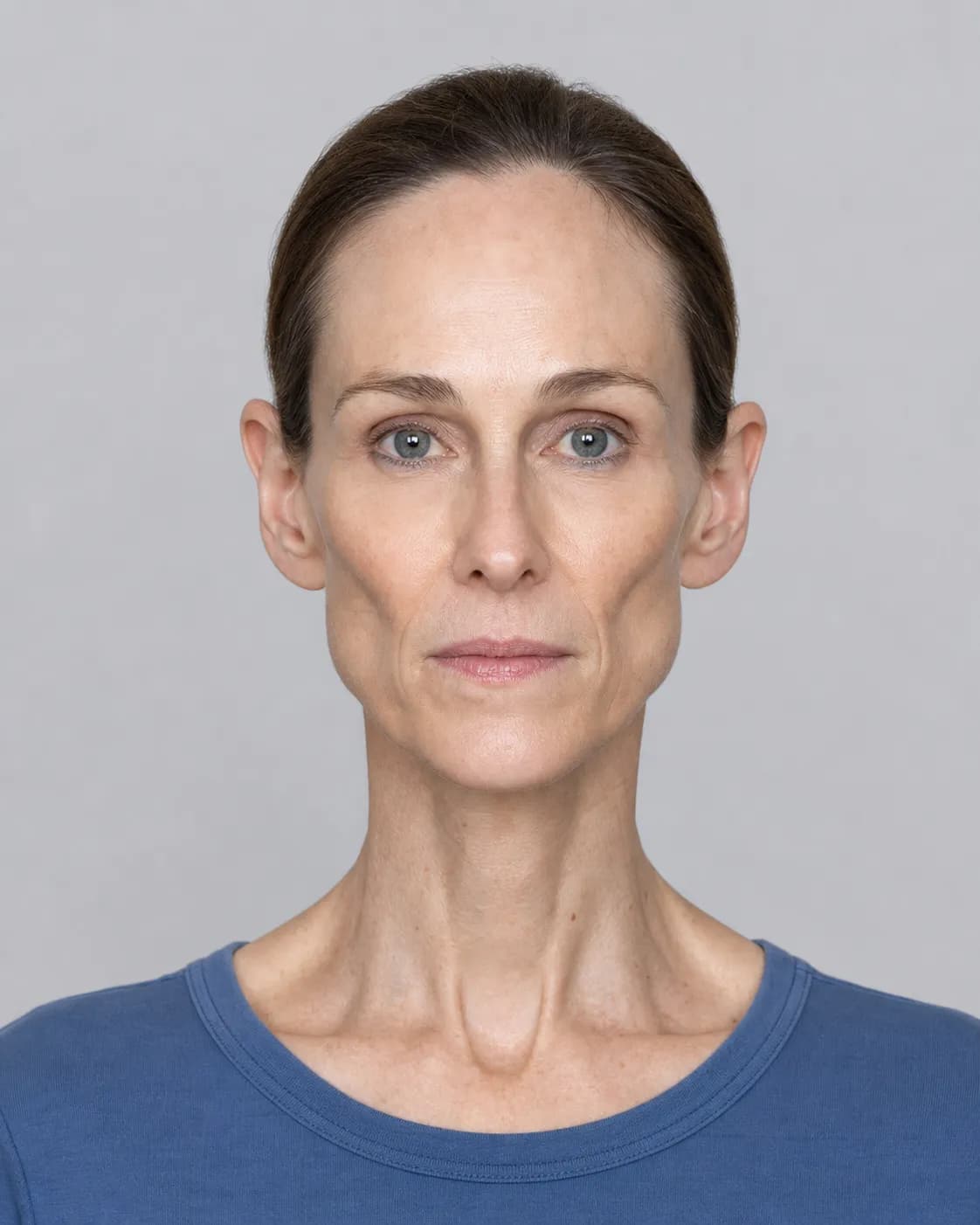
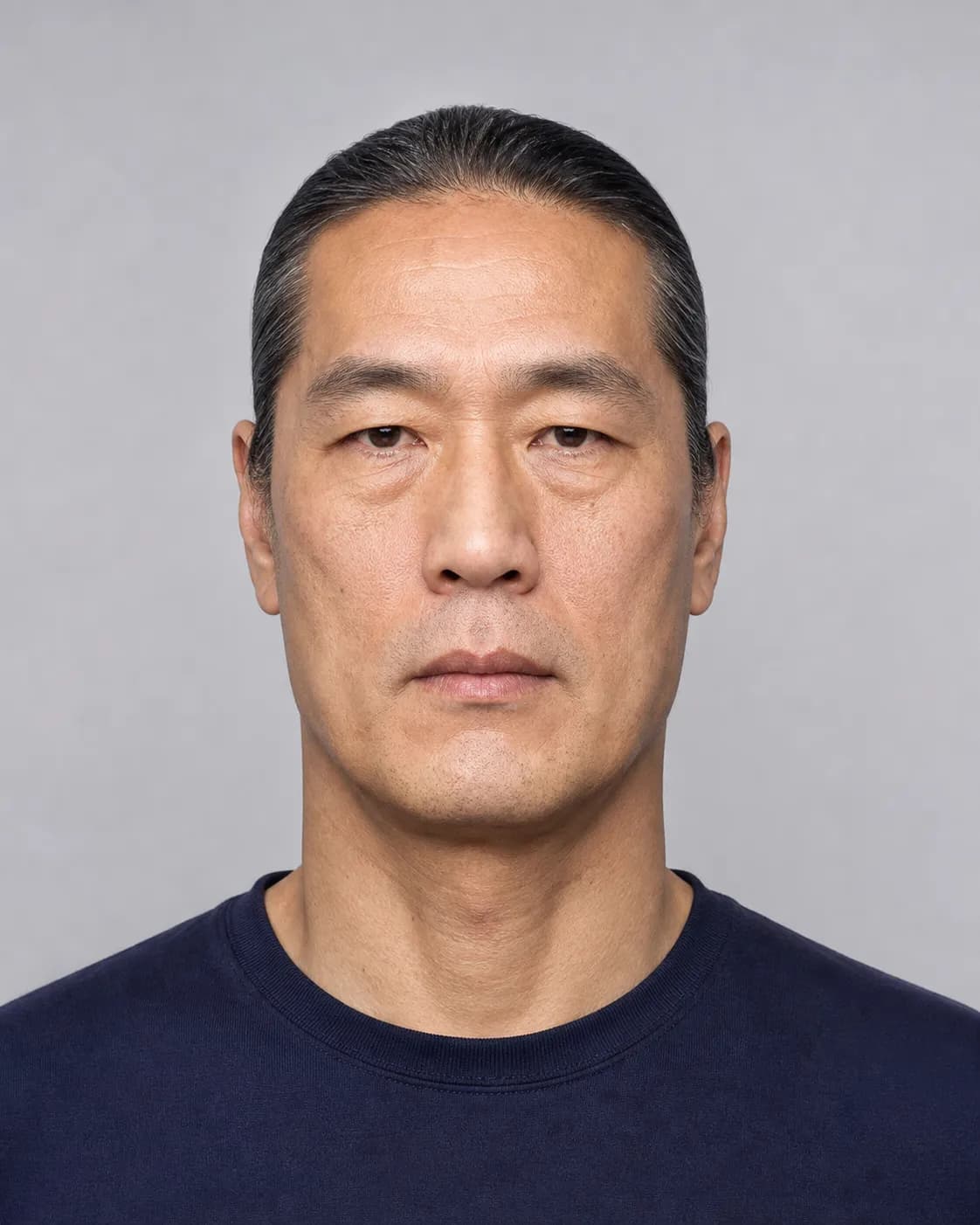
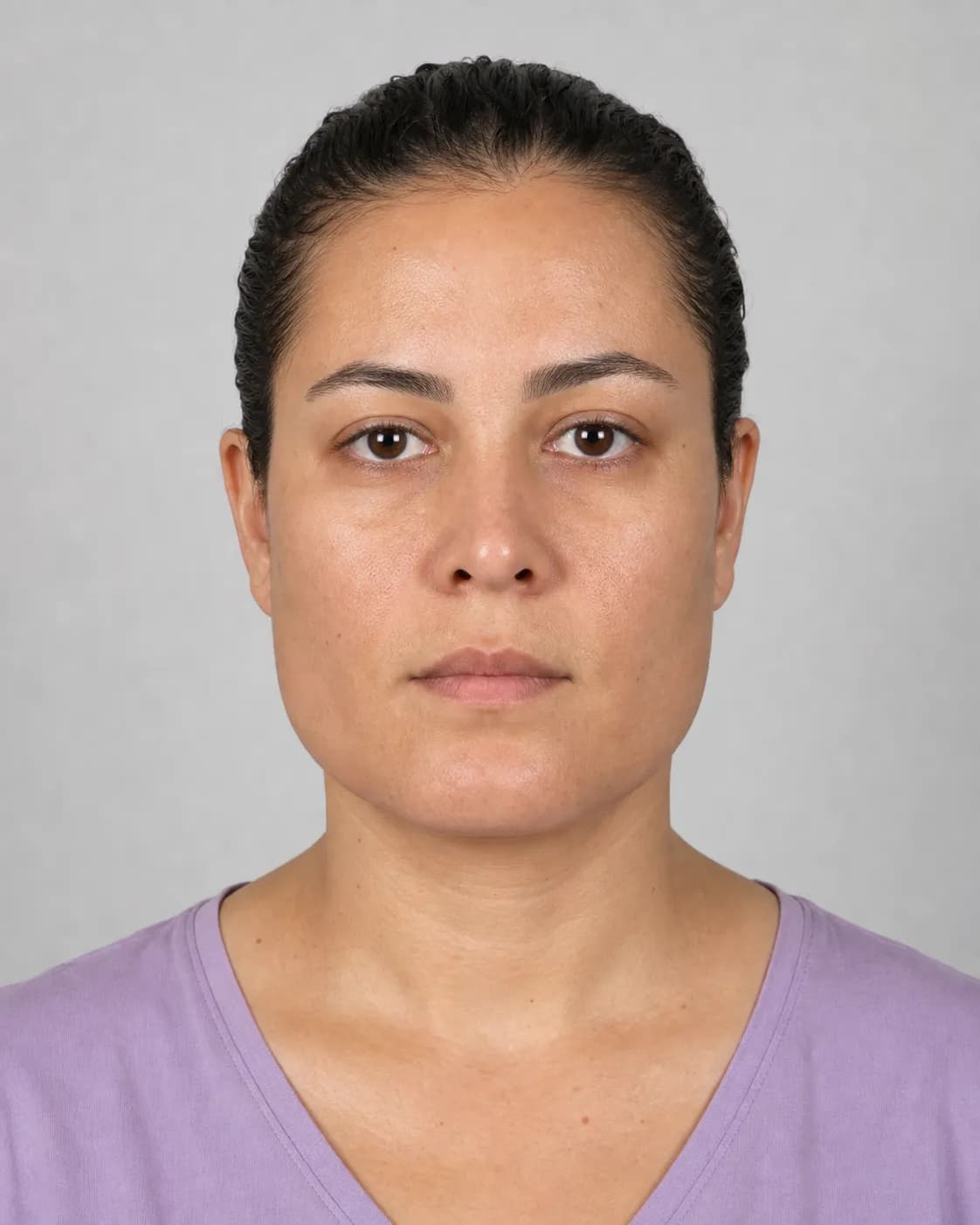
Or try an example

Ready.

For a good result

  • Face the camera directly, front-on
  • Good, even lighting on your face
  • Only your face in frame, not cropped at the chin or forehead
  • A sharp, in-focus photo

What a face shape test gives you here

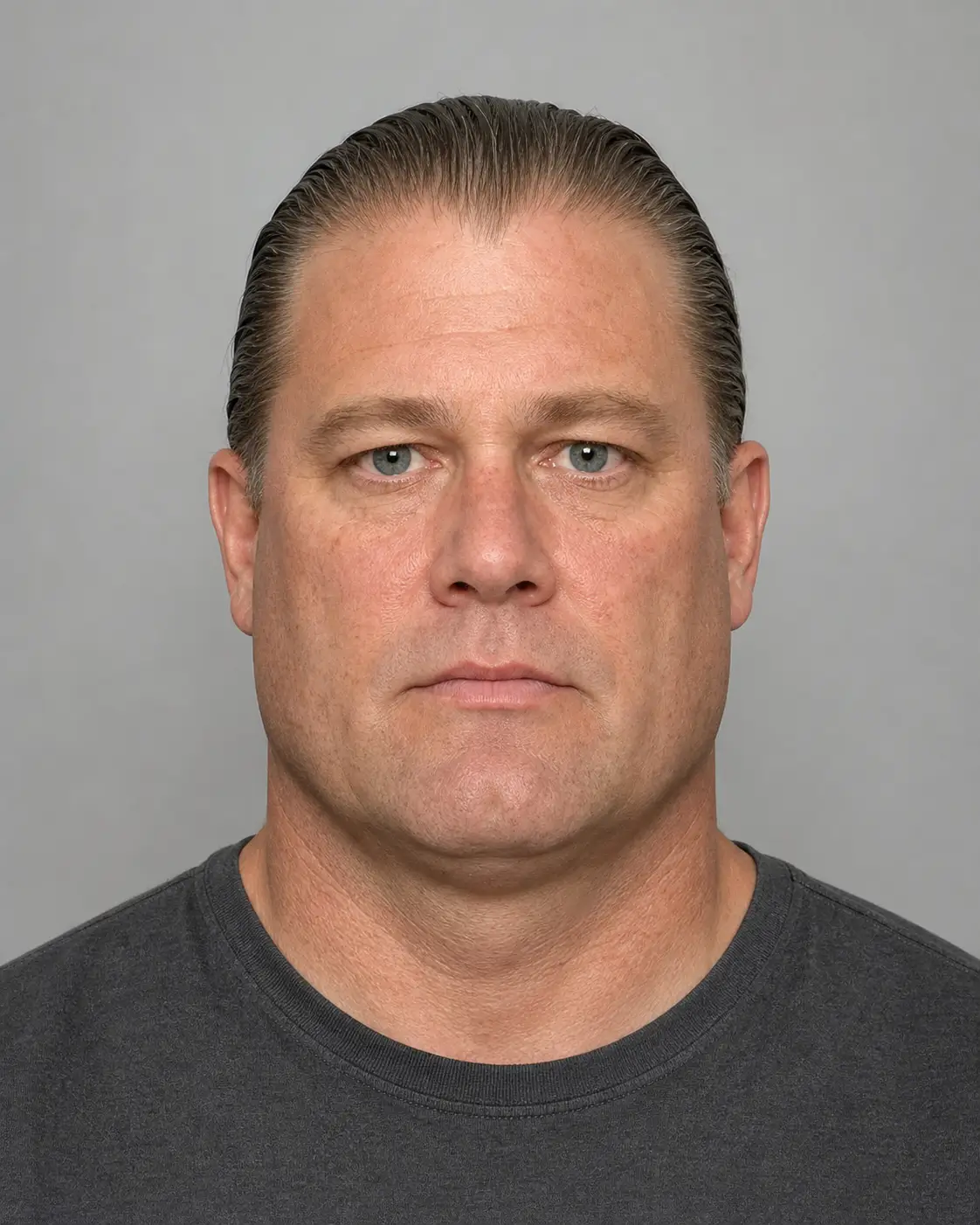
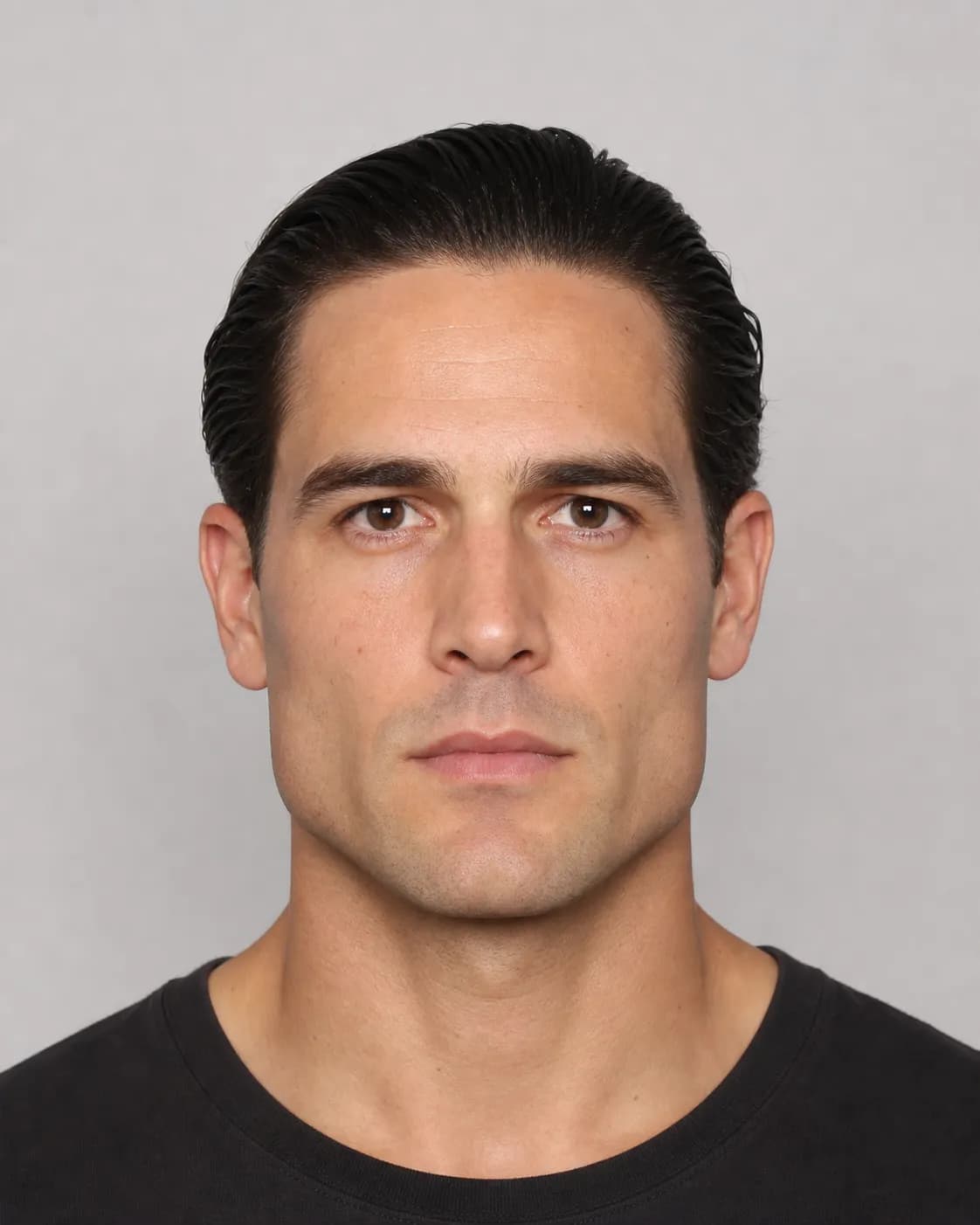
Most face shape detectors return one word. This one returns the word plus the five measurements it was derived from, so you can see which reading put you in that category and how close you sat to the next one. Here is a real detected face shape, measured from the portrait on the left.

Detected face shape

Oval

Length / width
1.23
Forehead / jaw
0.96
Jaw / cheekbones
0.84
Chin / cheekbones
0.19
Jawline turn
107.8°

Why this one: Length runs moderately greater than width, forehead and jaw come out within a few percent of each other, and the jawline curves instead of turning at a corner. No single reading goes to an extreme, and that is what oval means here.

Your own result comes back in this format, drawn from your photo instead of this one.

How to find your face shape

Measuring your own face shape with a tape measure

There are two ways to do this and underneath they are the same method. One uses a tape measure and a mirror. The other places landmark points on a photo. Start with the manual one — once you have done it by hand, what a detector tells you stops being a verdict and becomes something you can check.

You do not need a tool, a photo, or an upload for this. Four measurements and one comparison will place almost any face, and doing it by hand has one advantage over any detector: you can see your own hairline, which a landmark model cannot.

A portrait with lines drawn across it marking where the four measurements are read: forehead width, cheekbone width, jaw width, and face length from hairline to chin
Forehead · Cheekbones · Jawline · Face length
  1. 01

    Forehead

    Measure across the widest part of your forehead, roughly halfway between your eyebrows and your hairline. Take it straight across, not following the curve of your head.

  2. 02

    Cheekbones

    Measure from the outer corner of one eye, across the top of the cheekbone, to the outer corner of the other. This is usually the widest measurement of the four.

  3. 03

    Jawline

    Find the point below your ear where the jaw turns, and measure from there to the tip of your chin. Double it — that gives you the jaw width without trying to run a tape around the curve.

  4. 04

    Face length

    Measure from the center of your hairline straight down to the tip of your chin. This is the one number a detector cannot read directly, because the model sees skin rather than hairline.

Reading the four numbers

Start with length against cheekbones. Clearly longer than wide points at oblong; close to equal points at round; in between points at oval. Square is the exception to this step — it is decided by the jaw rather than by length, so leave it until step three.

Then compare forehead against jaw. Forehead wider means heart or diamond; jaw wider means triangle; roughly equal keeps you in the oval, round, square and oblong group.

Finally look at your jawline in the mirror rather than on the tape. A visible corner below the ear points to square or oblong; a continuous curve points to round or oval.

If two shapes still fit, you are near a boundary, and that is a real finding rather than a failure to measure. Styling guidance for both will be partly right for you.

Measuring by hand and running the detector are worth doing together. Where they disagree, the reason is usually the hairline: the tape includes it and the detector does not, so a high hairline makes a face read longer by hand than on screen.

What the detector does with your photo

How a face shape detector actually decides

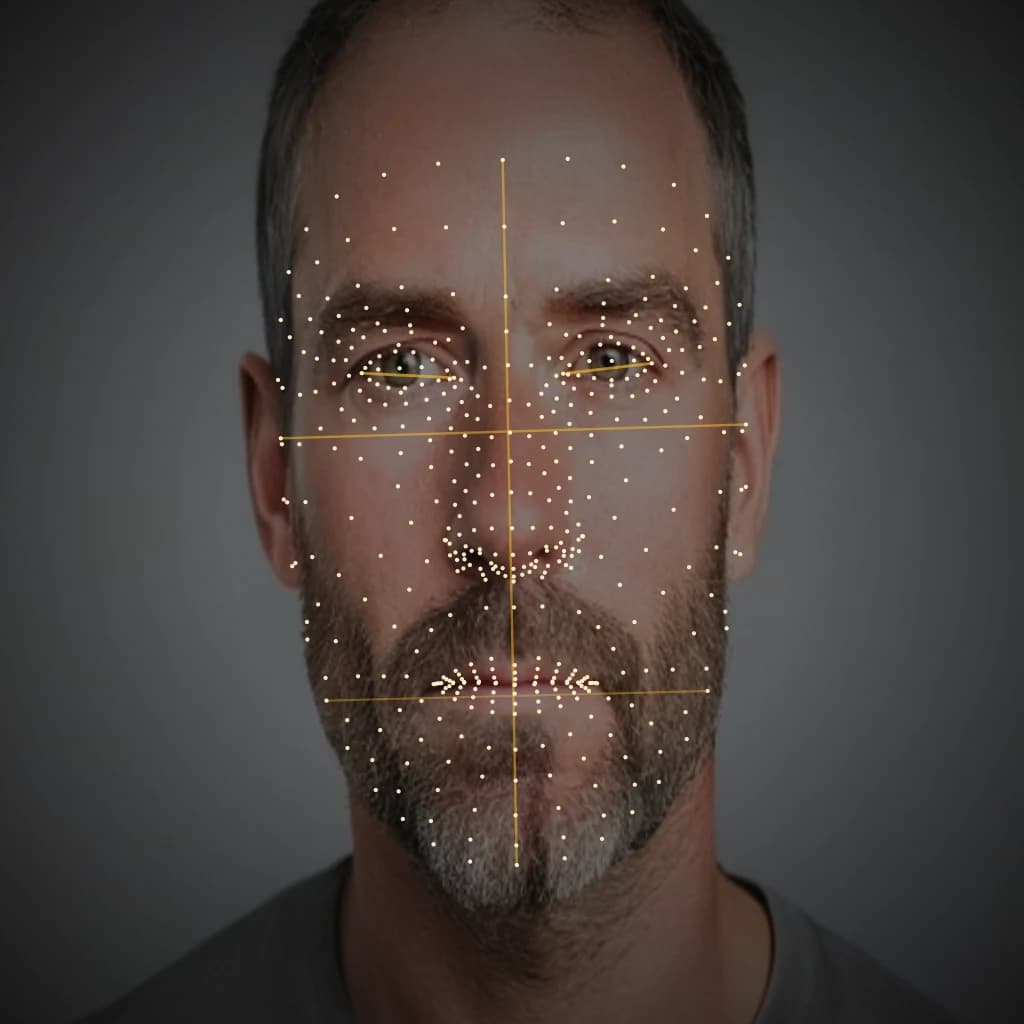
It runs those same four comparisons. What changes is where the numbers come from: instead of a tape measure, an AI landmark model places 478 points on your face and reads the widths between them. That removes the two things most likely to go wrong by hand — finding the widest point of your cheekbones by eye, and keeping the tape level while you read it.

Every automatic face shape test, this one included, does the same three things. It finds landmark points on your face. It computes a handful of widths and heights between those points. Then it compares those numbers against boundaries and prints whichever label the comparison lands on.

The first two steps are measurement. Given the same photo they return the same numbers today, next week and next year, and every number points at a part of your face you can go and look at. The third step is not measurement. It is a convention.

What a face shape calculator reads off your photo
Length / width
Face length divided by cheekbone width. The single number that separates a long face from a short one.
Forehead / jaw
Forehead width divided by jaw width. This is the one comparison that needs no outside reference — it compares two parts of your own face against each other, so it holds regardless of whose faces the boundaries were drawn from.
Jaw / cheekbones
Jaw width relative to cheekbone width — how much the face narrows below the cheekbones.
Chin / cheekbones
Chin width relative to cheekbone width — a pointed chin versus a broad one.
Jawline turn
How sharply the jawline turns. A high value reads as an angular jaw, a low one as a rounded curve.

The forehead-to-jaw comparison is worth singling out. Heart, diamond and triangle are defined by which half of your face is wider, and that question is answered entirely inside your own photo. No population data is required, so those calls are solid.

Long versus short, angular versus round — those need an outside reference. Someone has to decide how long a face has to be before it counts as long, and that decision comes from a set of faces. Which set, nobody in this category publishes. Ours is stated further down this page.

How to photograph your face so the result means something

Face shape is read from geometry, and geometry moves when the camera moves. These five things account for most of the variation people see when they test the same face twice.

  • Face the camera straight on. A turned head foreshortens one side, which narrows the jaw on that side and can flip the forehead-to-jaw comparison.
  • Keep the camera at eye level and about arm's length. Shooting from above shortens the face and pushes the reading toward round; shooting from below lengthens it.
  • Sit or stand upright rather than lying down or reclining. Gravity shifts how soft tissue sits on the jaw and cheeks, and a reclined body is usually a tilted head as well.
  • Pull hair back from your forehead and jawline. The measurement follows the edge of your face, so hair across the temples changes the forehead reading.
  • Use even, front-on light. A strong side light darkens one edge of the face and the landmark detector will place points where it can see them.

If a photo is too far off, this tool refuses to score it rather than returning a confident guess. A rejection is more useful than a wrong answer.

These read cleanly

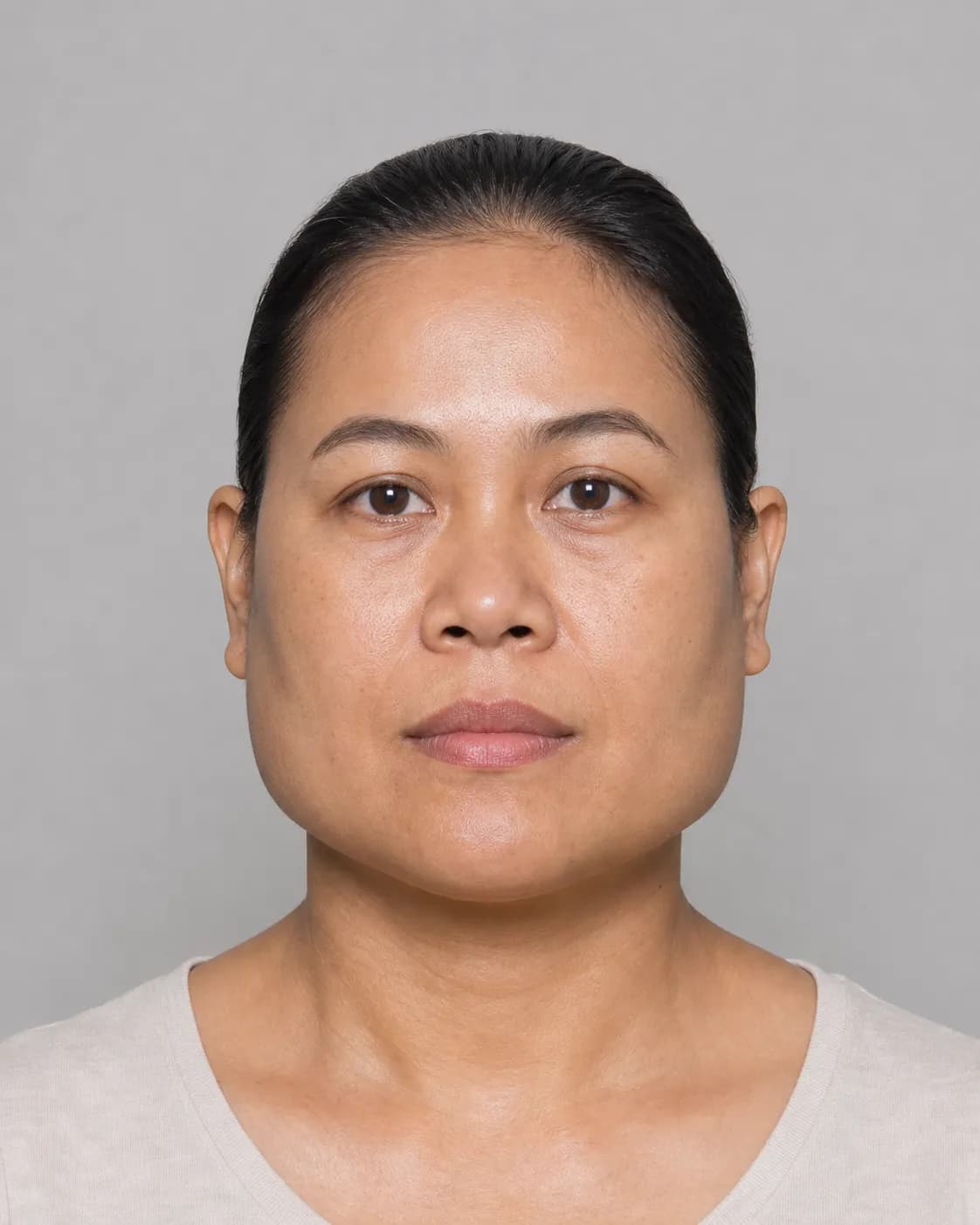
These get refused

The seven face shapes, and what separates them

Seven categories is the count most stylists and most face shape tests use. They are not carved up by nature — they are a vocabulary that turned out to be useful for talking about haircuts, glasses and makeup. Plenty of faces sit near a boundary and could reasonably be called either of two shapes.

Oval

No single measurement goes to an extreme

What puts a face here

  • Length 1.16–1.24× width
  • Forehead ≈ jaw
  • Jawline curves

Length is moderately greater than width, forehead and jaw are close to each other in width, and the jawline curves rather than turns. Oval is the shape most often described as balanced, and that reputation says less about the face than about the categories: oval is where you land when no single measurement goes to an extreme. It is also the most commonly assigned shape, partly for that reason and partly because it is the default many manual guides fall back on when a face is hard to place.

Often confused with

Round and oblong, at opposite ends. The separation from both is length against width, and nothing else — an oval and a round face can have identical forehead-to-jaw readings. If your length-to-width ratio sits near either boundary, the honest answer is that you are between two shapes, and the styling advice for both will apply to you in part.

Round

Length and width come out nearly equal

What puts a face here

  • Length up to 1.16× width
  • Forehead ≈ jaw
  • Jawline curves

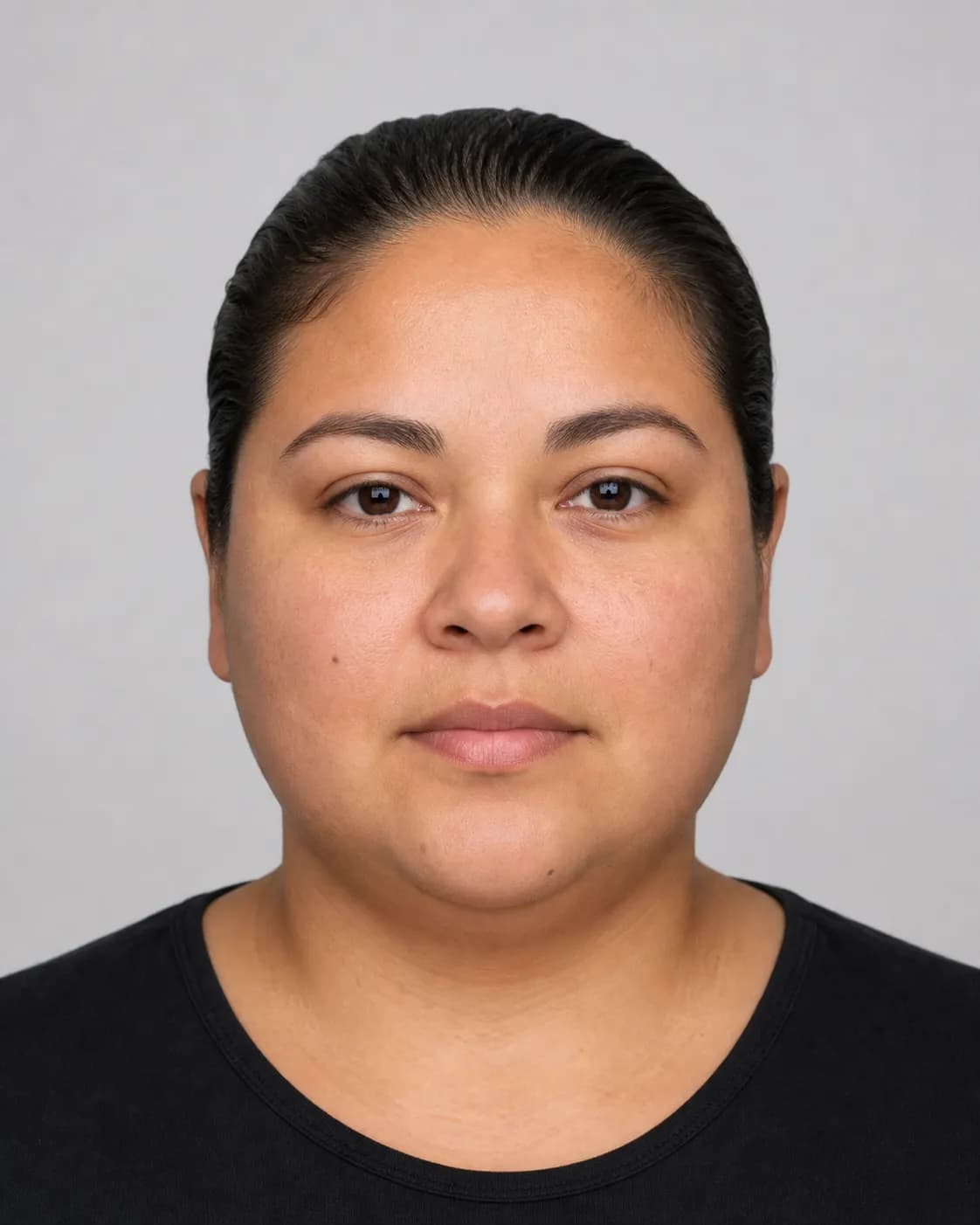
Length and width are close, and the jawline curves smoothly from ear to chin with no visible corner. Cheeks are usually the widest point but not dramatically so, and the overall impression is of soft transitions rather than defined edges. A round face is not the same as a full face — the category is about proportion and jaw contour, and a lean face with a short length-to-width ratio and a curved jaw is still round.

Often confused with

Square. The two share nearly identical proportions and differ only in the jawline: square turns at a corner, round curves through it. This is the single hardest distinction for any front-facing photo to make, because the jaw corner is angled away from the camera. If you are unsure, a three-quarter photo in a mirror settles it faster than any tool.

Square

Decided by the corner of the jaw, not by length

What puts a face here

  • Jaw turns 108° or more
  • Forehead ≈ jaw
  • Not a long face

The jawline turns at a distinct angle instead of curving, and stays wide most of the way to the chin. Forehead, cheekbones and jaw tend to read as three similar widths, which is what produces the impression of a strong, straight-sided face. Length is not what places a face here — a square face can be short or of average length, and it is the corner of the jaw that decides. In styling terms it is usually treated as the shape with the most defined structure.

Often confused with

Round, and to a lesser extent oblong. Our measurement is least confident here of all seven shapes: jaw angularity has to be inferred from a front-facing photo where the corner of the jaw is partly turned away, so a square jaw can read as round if the light is flat or the head is tilted even slightly.

Heart

The upper half is the wider half

What puts a face here

  • Forehead 6% wider than jaw
  • Forehead nearly as wide as cheekbones

The forehead is clearly the wider half, the face narrows through the cheekbones, and the chin is often pointed. Some descriptions require a widow's peak at the hairline; the measurement here does not, since it reads the contour of the upper face rather than the hairline itself. What defines the shape is the downward taper, not what the hairline is doing.

Often confused with

Diamond. Both taper downward, and the difference is the forehead: broad in its own right for heart, narrow for diamond. Because this call comes from comparing two parts of your own face, it is one of the more reliable ones a detector can make — if a tool tells you heart and another says diamond, the forehead reading is where they diverged.

Diamond

Cheekbones are the widest point, by a clear margin

What puts a face here

  • Cheekbones widest
  • Forehead and jaw both narrow

Cheekbones are the widest part of the face, with the forehead and the jaw both narrower. The face tapers in two directions from the middle, which is what gives the shape its name. It is the least commonly assigned of the seven, and a fair number of faces labelled diamond by one tool get called heart or oval by another.

Often confused with

Heart above, oval below. The heart distinction is forehead width; the oval distinction is how pronounced the cheekbones are relative to everything else. Diamond is a narrow band between two much larger categories, which is why its boundaries are the ones most worth treating as approximate.

Oblong

Clearly longer than it is wide

What puts a face here

  • Length from 1.24× width
  • Forehead ≈ jaw

Also called rectangular. Forehead, cheekbones and jaw are similar in width, and the face is noticeably longer than it is wide. The jawline may be curved or angular — that is not what defines the category. Oblong is essentially an elongated version of either round or square, and which of the two it resembles depends on the jaw.

Often confused with

Oval, and it is the most consequential confusion on this page. The line between them is purely a length-to-width threshold, and every tool sets that threshold for itself without publishing it. If you have been given oval by one site and oblong by another, neither necessarily measured wrong.

Triangle

The lower half is the wider half

What puts a face here

  • Jaw 4% wider than forehead

Sometimes called pear. The jaw is the widest part and the face narrows toward the forehead, making it the inverse of heart. The jawline itself can be soft or defined; what places a face here is the width relationship, not the jaw contour. It is more common in male faces, where jaw width tends to run higher relative to the forehead.

Often confused with

Square, when the jaw is wide and angular but the forehead is only slightly narrower. Like heart, this shape is decided by comparing your forehead against your own jaw, so the call itself is reliable — the uncertainty is only about how large the difference has to be before the label changes.

Label versus measurement

What a measured result gives you that a label does not

Every face shape test does the same arithmetic underneath. What differs is how much of it you get to see.

What comes back
This detectorA shape, the five ratios it was derived from, and which reading decided the call.
A label-only testOne word.
Whether you can check it
This detectorEvery ratio names a part of your own face, so you can put a tape measure on it and get the same answer.
A label-only testNothing to check against — the label is the entire output.
When your face sits near a boundary
This detectorThe result says so, and the ratios show how close the neighboring shape was.
A label-only testOne confident answer, whichever side of the line you landed on.
Why two sites disagree about you
This detectorAnswerable: compare the ratios and you can see which threshold was drawn differently.
A label-only testUnanswerable, because neither site shows where its line sits.
Where the photo is measured
This detectorIn your own browser, on your device.
A label-only testOften uploaded to a server to be processed.
What it costs
This detectorFree while in beta.
A label-only testOften a credit balance, a paywall, or a watermark.

What people do with a face shape once they have it

Almost nobody wants the category for its own sake. It is a shortcut for a decision, and which decision it is changes which of the five readings actually matters to you.

Choosing a haircut

The most common reason by a wide margin. Hair adds width where it has volume and length where it hangs, so the length-to-width reading is the one to look at first and the jaw contour second.

Picking glasses frames

The usual advice is to contrast the frame against the face — angular frames on a round face, rounded frames on a square one. Here the jaw-angle reading matters more than length, the reverse of the haircut question.

Contouring or shaping facial hair

Both rework the lower third of the face, and both are worked backwards from the jaw. Contour under the cheekbones narrows a wide jaw; a beard left fuller at the sides widens a narrow one. Either way, jaw-to-cheekbone is the reading that drives the decision.

Settling which one you actually are

A fair share of people arrive because two sites gave two different answers. That is a boundary question rather than a measurement question, and the ratios settle it faster than another label does.

This is why the result gives you the numbers rather than the category alone. Depending on which of these brought you here, a different one of the five readings is the one that decides your answer.

How this one works

Four things you can hold this page to

None of these are claims about accuracy. They are things you can verify on the page itself.

The photo is measured on your device

Landmark detection runs in your browser. The image is read locally and scored there.

Every label arrives with its numbers

You get the five ratios the call was made from, not just the word they add up to.

Close calls are stated, not smoothed over

When your face sits near the line between two shapes, the result shows you that rather than picking one and moving on.

Free while in beta

No credit balance, no paywall, no watermark on anything.

Questions people actually ask

Find out what your face measures

One photo, five measurements, and the face shape they add up to. Free while in beta, and the measuring runs on your own device.

Upload a photo