Hairstyle Finder: Best Haircuts for Your Face Shape

Upload one front-facing photo—or pick your face shape directly—to filter haircuts by geometry, hair texture, density, and forehead height, complete with a copyable barber or stylist card.

Free while in beta. Facial landmark measurements run in your browser.

Drag a photo here, or click to choose one

JPEG or PNG. Front-facing, well-lit, one face per photo.

Or try an example

Ready.

For a good result

  • Look straight at the camera with hair pulled back off your temples and jaw
  • Use even front lighting so your cheekbones and jawline are clearly visible
  • Keep a neutral expression with your head level

Landmark detection runs in your browser. Your photo stays on your device during the free measurement.

Already know your face shape? Pick below without uploading ↓

Already know your face shape? Pick one directly without uploading:

Worked Example: From 5 Measured Face Ratios to Same-Face Cuts & a Stylist Card

Instead of handing out a vague shape label or fake face-swapped wigs, the tool measures five facial ratios, checks boundary closeness, applies hair texture and density filters, and produces a saveable chair card. Below is a live production run on one natural-daylight portrait alongside three realistic cuts rendered on the same face.

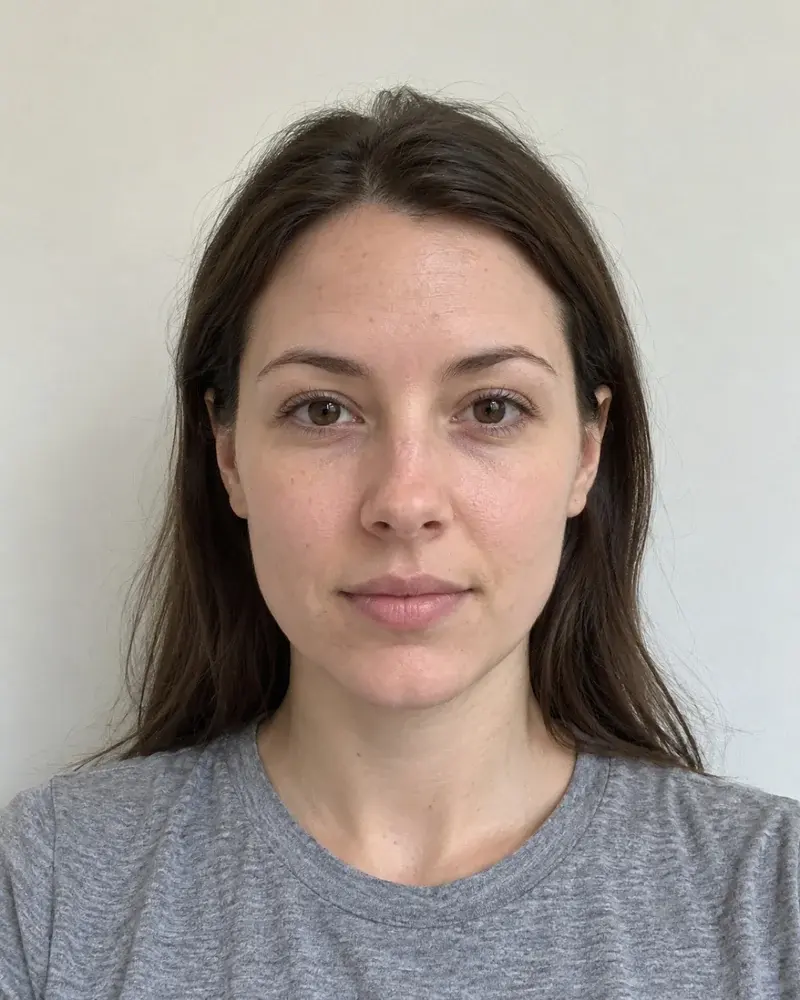
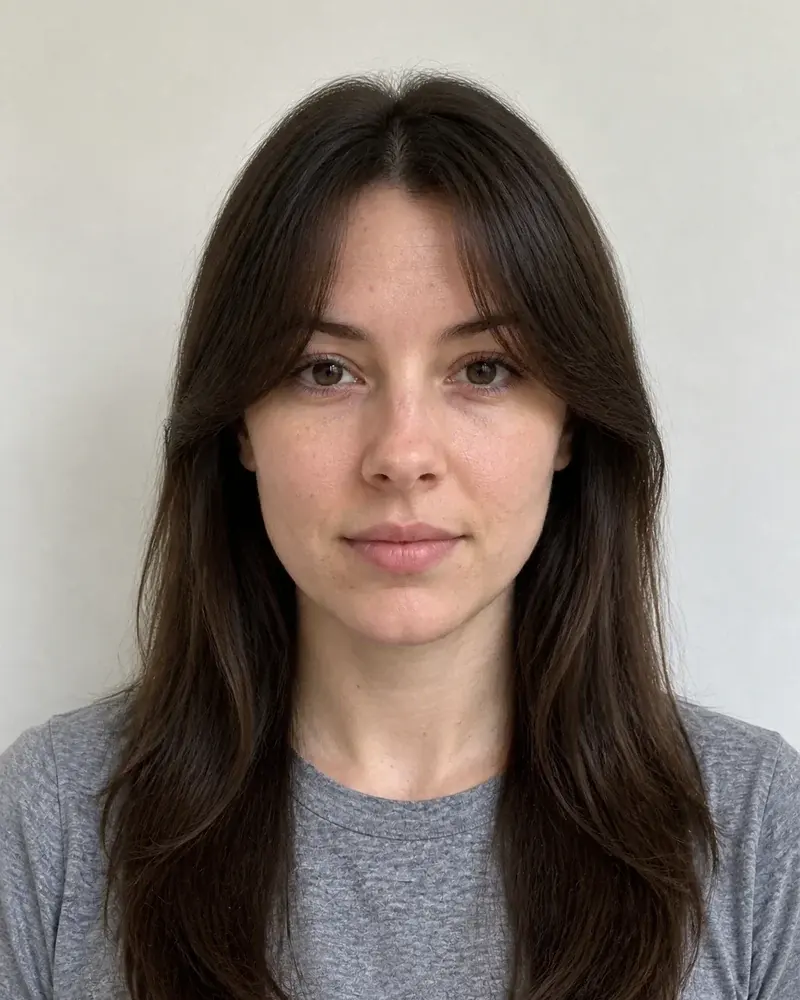
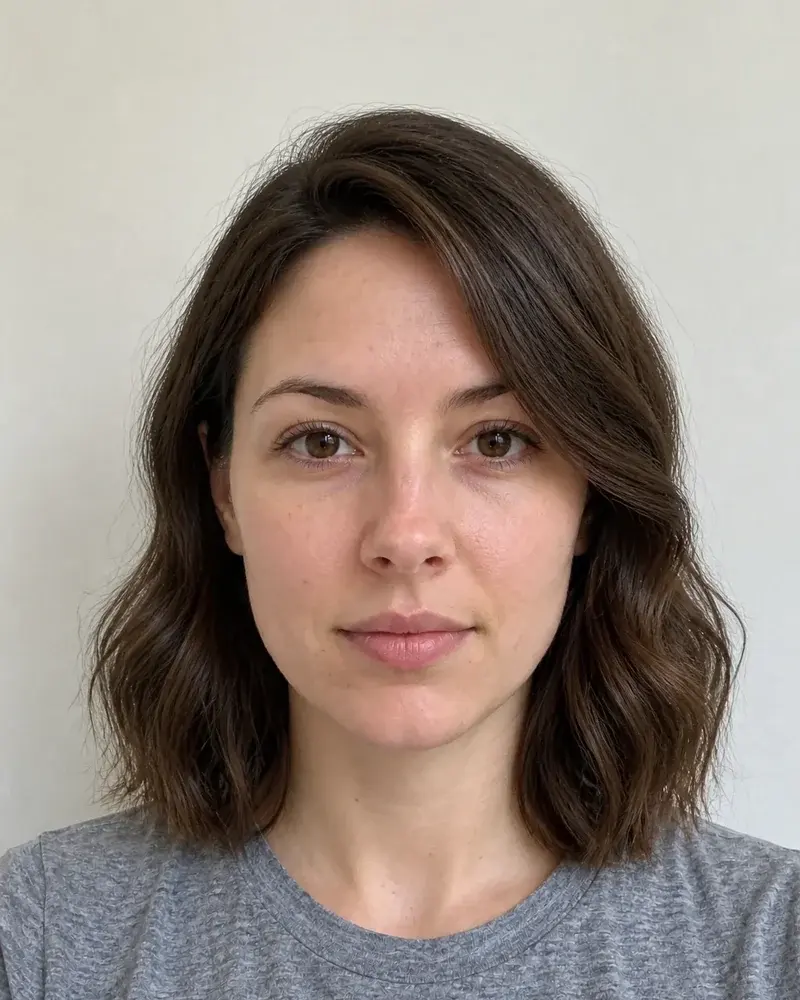
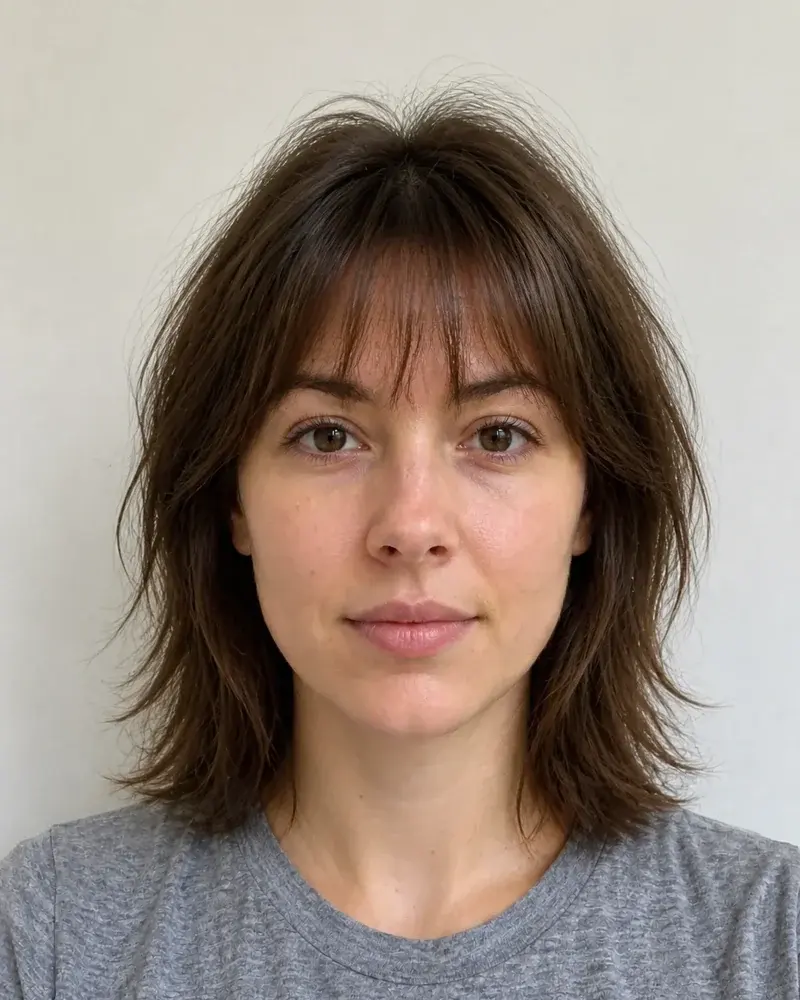
Original portrait (hair back) → 3 identity-preserving matched cuts

Natural daylight front-facing sample portrait with hair pulled back measured for face shape and haircut matching
Original (Measured)
Same woman previewed with curtain bangs and long layers
Curtain Bangs & Layers
Same woman previewed with a deep side-part collarbone wavy lob
Collarbone Wavy Lob
Same woman previewed with a textured shoulder shag and wispy fringe
Wispy Fringe Shag

Same woman, same eyes, same lighting: our free tool gives you the ratios, texture match, and PNG chair card; our optional $9.90 one-time report renders 6 previews like these on your own photo.

Measured face shape

Heart

Clear fit: forehead measures 13% wider than jaw (1.13 forehead-to-jaw ratio) with a softly tapered chin.

Filters applied: Salon Cuts (Women) · Wavy · Medium density · Standard forehead

5 measured ratios

Length to cheekbone width
1.24
Forehead to jaw width
1.13
Jaw to cheekbone width
0.77
Chin to cheekbone width
0.17
Jawline contour turn
110.5°

Top 4 matched cuts

  • • Curtain Bangs with Long Layers
  • • Collarbone Wavy Lob
  • • Soft Side-Swept Bob
  • • Wispy Fringe Soft Shag

2 cuts to avoid

  • × High Crown Volume with Flat Sides
  • × Tight Slicked-Back Hairline

Ready-to-save Stylist Card — Curtain Bangs with Long Layers

Sides / Perimeter:
Long perimeter with curtain pieces grazing cheekbones
Top / Fringe:
Soft crown elevation with split curtain bangs
Technique:
Long internal scissor layers; skip razor thinning on fine ends
Styling Finish:
Blow-dry curtain bangs with a round brush rolling away from the face

Values above come directly from running our browser detector on this natural daylight sample portrait—your upload produces your own numbers, filters, and PNG chair card.

How to Find the Best Haircut for Your Face Yourself

Before relying on any detector, three quick mirror checks prevent almost every bad haircut. The tool automates the geometry step, while your own eyes still read hair density and growth direction best.

1.Compare your forehead, cheekbones, and jawline

Pull your hair back straight in front of a mirror. Notice whether your forehead is noticeably wider than your jaw (heart), your jaw is wider than your forehead (triangle), your cheekbones flare out widest (diamond), or all three stay close while length and jaw sharpness decide between oval, round, square, and oblong.

2.Match your hair texture and density before saving reference photos

The #1 cause of haircut regret is showing a barber a reference photo taken on a completely different hair type. Thick wavy hair holds a textured crop effortlessly; pin-straight fine hair collapses into a flat fringe unless cut blunt with lighter weight removal.

3.Check forehead height and natural cowlicks

Facial landmark detectors read skin contours, not your true hairline or crown cowlicks. If you have a high forehead or receding temples, prioritize textured forward fringes or curtain layers over tight pulled-back styles.

Controlled Self-Test: How Hair Covering Your Forehead Can Shift Measured Ratios

Running our browser MediaPipe detector on the exact same woman across three hairstyles shows forehead-to-jaw ratio drifting down from 1.13 (hair pulled back) to 1.12 (curtain bangs) and 1.10 (full wispy fringe). While this clear Heart shape stayed Heart, anyone sitting within 0.02 to 0.03 of a boundary can flip categories when bangs cover the forehead.

Same-Face Photo ConditionDetected ShapeLength / WidthForehead / JawJaw / Cheek
Hair pulled cleanly behind ears (baseline)Heart1.241.130.77
Soft curtain bangs covering templesHeart1.221.120.77
Full wispy fringe covering foreheadHeart1.231.100.78

Measured locally on our production 478-point detector across three images of one subject (n = 1 subject, 3 hair conditions). Individual hairline height and lighting may produce larger or smaller shifts—pulling hair back remains the cleanest baseline.

Best Hairstyles & Cuts to Avoid for All 7 Face Shapes

Every shape has a straightforward balancing goal: add visual width where the frame narrows, soften hard corners where angles dominate, and break up excess height on longer faces. Need a full breakdown of how face shapes are classified? Read our Face Shape Detector guide.

Oval

Balance goal: Preserve balanced proportions without hiding your eyes or crowding the sides.

Filter cuts for Oval

Barbershop (Men)

Textured Crop Taper, Classic Side Part, Ivy League, Off-Center Curtain Flow

Avoid: Heavy flat center bangs or boxy flat tops that distort balanced proportions

Salon (Women)

Collarbone Wavy Lob, Curtain Bangs with Long Layers, Textured Pixie, Soft U-Cut Layers

Avoid: Dense eye-covering bangs or flat ultra-long one-length hair that drags down features

Round

Balance goal: Create clean vertical lift and angle at the crown while keeping the sides slim.

Filter cuts for Round

Barbershop (Men)

Textured Quiff, Tapered Curly Top, Modern Faux Hawk, Burst Fade Crop

Avoid: Flat blunt bowl cuts, uniform zero-volume buzz cuts, or bulky unblended sides

Salon (Women)

Collarbone Wavy Lob, Long Face-Framing Layers, Blunt Angled Lob, Tapered Coily Crown

Avoid: Blunt chin-length bobs or thick straight-across bangs that stop at the widest cheek line

Square

Balance goal: Complement a defined jawline with textured movement or subtle softness rather than boxy corners.

Filter cuts for Square

Barbershop (Men)

Textured Crop Taper, Classic Side Part, Textured Blunt Crew Cut, Natural Slick-Back Taper

Avoid: Boxy flat tops or heavy unblended side bulk that exaggerate jaw width

Salon (Women)

Deep Side-Part Waves, Curtain Bangs with Long Layers, Soft U-Cut Layers, Wispy Fringe Shag

Avoid: Sharp chin-level blunt bobs or heavy jaw-stacked curls that double down on lower angles

Heart

Balance goal: Soften upper-third forehead width and add gentle fullness near the jawline.

Filter cuts for Heart

Barbershop (Men)

French Crop with Drop Fade, Messy Fringe Low Taper, Off-Center Curtain Flow, Medium Layered Flow

Avoid: Tight pulled-back slick backs or flat center parts that highlight temple width

Salon (Women)

Curtain Bangs with Long Layers, Soft Side-Swept Bob, Soft U-Cut Layers, Collarbone Wavy Lob

Avoid: High crown poofs with flat sides or tight slicked-back hairlines that emphasize upper width

Diamond

Balance goal: Add soft fullness at the forehead and jaw so prominent cheekbones feel seamlessly framed.

Filter cuts for Diamond

Barbershop (Men)

Messy Fringe Low Taper, Off-Center Curtain Flow, Temple-Volume Scissor Cut, Textured Crop Taper

Avoid: Ultra-high shaved temples or high skin fades stacked under tall quiffs

Salon (Women)

Soft Side-Swept Bob, Curtain Bangs with Long Layers, Dry-Cut Rounded Curly Layers, Textured Pixie

Avoid: Tight slicked-back sides or heavy eye-covering fringe that isolates cheekbones

Oblong

Balance goal: Shorten perceived vertical length with forehead coverage and relaxed side width.

Filter cuts for Oblong

Barbershop (Men)

Off-Center Curtain Flow, Messy Fringe Low Taper, Side-Swept Scissor Taper, Low Taper with Natural Lineup

Avoid: High skin fades with tall pompadours or flat zero-volume buzz cuts

Salon (Women)

Soft Side-Swept Bob, Wispy Fringe Soft Shag, Curtain Bangs with Long Layers, Shoulder-Length Coils with Fringe

Avoid: Flat extra-long one-length hair or towering crown volume with flat sides

Triangle

Balance goal: Build balanced volume across the temples and crown while keeping jaw-level weight sleek.

Filter cuts for Triangle

Barbershop (Men)

Temple-Volume Scissor Cut, Messy Fringe Low Taper, Tapered Curly Top, Burst Fade Crop

Avoid: Ultra-short shaved temples or heavy side bulk sitting around the ears and jaw

Salon (Women)

Crown-Volume Midi Cut, Collarbone Wavy Lob, Textured Pixie with Swept Fringe, Soft U-Cut Layers

Avoid: Chin-length blunt bobs or heavy curls stacked right at the jawline

Why Hair Texture, Density & Forehead Height Override Face Shape

Two people with identical oval or square measurements can walk out with opposite results from the exact same haircut. Use these override rules whenever a face-shape chart clashes with how your hair actually behaves.

In a multinational hair morphology study of 19,461 adults across nine countries (Flament et al., 2025, Clinical, Cosmetic and Investigational Dermatology), researchers classified global hair diversity using measurable curl diameter, wave number, and density—roughly 32.7% straight, 41.6% wavy, 12.8% curly, and 13.0% coily—showing why geometry-only hairstyle charts fail when curl pattern and thickness are ignored.

Straight + Thin or Fine Hair

Avoid heavy razor layering or thinning shears, which leave ends looking see-through. Choose blunt scissor perimeters (Blunt Angled Lob, Textured Blunt Crew Cut, or Ivy League Taper) that keep every strand contributing to visual thickness.

Wavy + Thick Hair

Your natural bend creates effortless volume, so bulky one-length cuts quickly turn triangular. Ask for internal weight removal, graduated layers, or scissor-over-comb tapering so waves move without puffing out at the ears.

Curly & Coily Hair (3A–4C)

Shrinkage changes where volume lands once hair dries. Ask for dry curl-by-curl shaping, low temple tapers, or sculpted crown volume instead of wet straight-hair guides that overestimate finished length.

High Forehead or Receding Temples

Face-shape geometry alone can recommend sleek pulled-back cuts that expose more forehead than you want. Toggling High Forehead in our tool filters out exposing styles and prioritizes textured forward crops, curtain bangs, and wispy fringes.

Glasses Frames & Beard Pairing

Heavy dark glasses frames add horizontal weight across the midface—keep temple sides tapered cleanly so frame arms do not push hair outward. If you wear a structured beard, keep the sideburns blended smoothly into the taper and trim cheek bulk slightly tighter on round or square faces.

How to Talk to Your Barber or Stylist (Without Haircut Regret)

Saying "short on the sides, longer on top" means something different to every barber. Bring concrete guard numbers, save your PNG chair card above, and clarify how you want the ends finished.

Standard clipper guard numbers and common barbering terms
Guard / TermApproximate LengthBest Facial Fit & Effect
#1 Guard3 mm (1/8 in)Skin-close low fades; best on round or square shapes when keeping top height clean
#2 Guard6 mm (1/4 in)Versatile everyday taper; hides scalp contrast on fine hair while keeping sides sharp
#3 Guard10 mm (3/8 in)Natural scissor-blended look; keeps temple fullness for oblong, diamond, and triangle faces
#4 Guard13 mm (1/2 in)Fuller structured sides for longer cuts, curly textures, or balancing a strong jaw
Taper vs. FadeTemples/nape vs. full sidesTaper keeps natural weight over the ears (flattering for oblong/triangle); fade drops tighter all around
Point Cut vs. Blunt CutScissor finishPoint-cutting adds airy movement on thick hair; blunt cutting preserves fullness on thin or fine hair

3 quick questions to ask before the first snip

  1. "Can you check my crown cowlick and growth direction before taking the top short?" (Prevents hair sticking straight up two days after washing.)
  2. "How much length will stay on top once it dries, and can I style it in under 5 minutes without a blow-dryer?" (Aligns wash-and-go reality with salon blowouts.)
  3. "Are you planning to use thinning shears or a razor on the ends?" (Say no if your hair is fine or thin; ask for point-cutting or internal layers instead if it is thick.)

Clipper guard millimeter equivalents follow standard Wahl/Oster guard sizing (#1 = 3 mm through #4 = 13 mm). Styling recommendations reflect common barbering and salon proportion conventions rather than clinical measurements.

Hairline, Beard & 2D Photo Limits

Knowing where a browser tool stops helps you use its output intelligently.

MediaPipe reads skin contours, not your true hairline

Landmark point #10 marks the upper visible forehead skin boundary rather than the anatomical hairline. If you have a high forehead, bangs covering your brow, or temple recession, switch on the High Forehead toggle manually—or check our Norwood Scale guide for hairline stage tracking.

Full beards alter measured jawline width

A thick beard adds visual width and changes how the jaw contour curve is detected, which can nudge oval or heart faces toward square or triangle. If you keep a beard permanently, that measured silhouette is actually what people see—just note your clean-shaven jaw may sit narrower.

Geometric recommendation vs. AI hairstyle previews

This free tool matches cuts by proportion, texture, and density and writes your barber card without uploading your photo. It does not synthesize fake try-on images on the free page. If you want to preview 6 realistic AI hairstyles rendered directly on your own face before cutting, that is included in our optional $9.90 one-time full report.

Hairstyle Finder FAQ

Match haircuts to your face shape in 10 seconds

Upload one front-facing photo—or pick your shape manually—to get texture-matched cuts, styles to avoid, and a ready-to-copy barber card.

Find my best haircut